full body focus
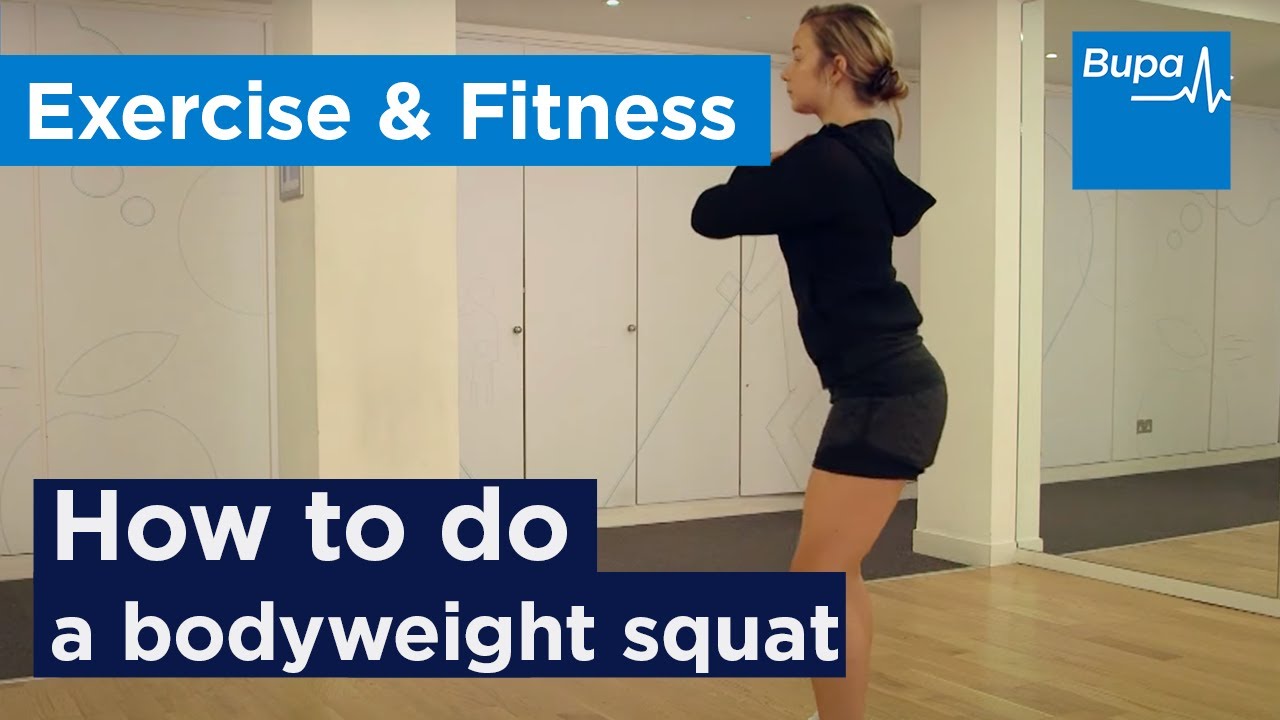
Deep Bodyweight Squat
Builds lower body strength and mobility.
Key cue: Sit down between your heels with your chest tall and knees over your toes.
Area
full body
Level
intermediate
Volume
3 × 10
Goal
mobility
How to do it
- 1Stand with your feet a little wider than hip-width apart and your toes turned out slightly.
- 2Breathe in and sit your hips back and down, as though lowering into a chair, keeping your chest tall.
- 3Go as deep as is comfortable while your heels stay flat and your knees track over your toes.
- 4Breathe out and push through your whole foot to stand. Do 10 reps.
Easier and harder versions
- Easier
- Squat down to a chair, touch the seat lightly and stand back up, or hold a stable support.
- Harder
- Pause for 3 seconds at the bottom, take 4 seconds to lower, or hold a light weight at your chest once the squat is pain-free.
Helps with
Commonly used for:
Lower body strengthSquat mobilityEveryday sit-to-stand
Benefits
- Full lower-body strength
- Improves ankle and hip mobility
- Foundational movement pattern
Muscles worked
Strengthening. Strengthens your quadriceps, glutes, hamstrings, calves and core.
QuadricepsGlutesHamstringsCalvesCore
Form tips
- Hold a doorframe or a sturdy chair in front of you for balance if you need to.
- If your heels lift, put them on a thin book and work on loosening your ankles.
Common mistakes
- Letting your heels lift off the floor.
- Letting your knees fall inwards.
When to avoid or modify
- Knee pain in a deep bend: don't go as low, or use the Sit to Stand instead
- Recent knee or hip replacement, unless your surgeon has said deep bends are allowed
- Back pain as you squat: shorten the range
- Dizziness as you stand up: rise slowly
If in doubt, check with a qualified physiotherapist before continuing.
Where to go from here
The ladder
More for the full body