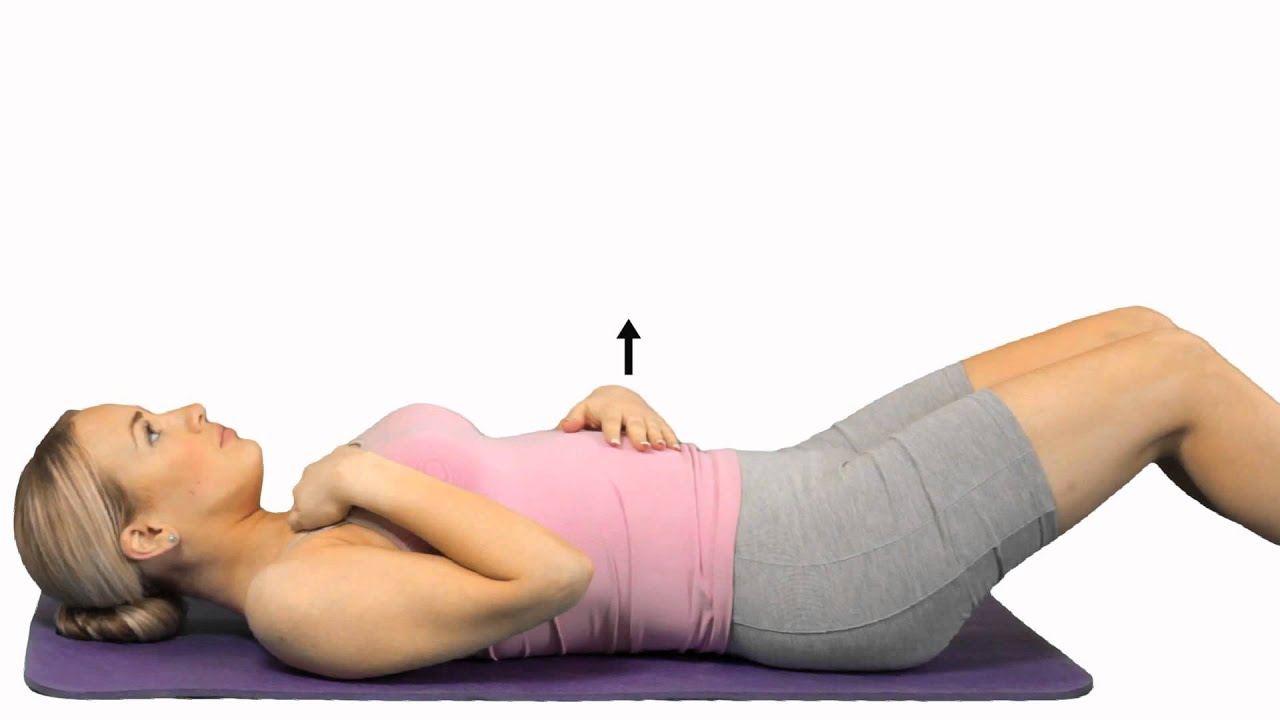
full body focus
Diaphragmatic Breathing
Calms the nervous system and improves core function.
Key cue: Breathe into your belly so the lower hand rises more than the upper one.
Area
full body
Level
beginner
Duration
120s
Goal
pain relief
How to do it
- 1Lie on your back with your knees bent and a pillow under your head, or sit in a supported chair. Rest one hand on your chest and one on your belly.
- 2Breathe in slowly through your nose for about 4 seconds, letting your belly rise into your lower hand while your chest stays quiet.
- 3Breathe out gently through pursed lips for about 6 seconds, feeling your belly soften.
- 4Carry on for 2 minutes, pausing if you feel light-headed.
Easier and harder versions
- Easier
- Use shorter breaths, about 3 seconds in and 4 out, or skip the counting and just breathe out a little longer than you breathe in.
- Harder
- Practise it sitting and standing in daily life, and build up to 5 minutes.
Helps with
Commonly used for:
Stress and tensionPre-sleep wind-downBreathing pattern retrainingPain-related guarding
Part of these condition plans
Where it fits in the step-by-step plans on our condition pages.
Benefits
- Calms the nervous system
- Reduces pain perception
- Supports core function
Muscles worked
Breathing. Uses your diaphragm, with your deep core and pelvic floor.
DiaphragmDeep corePelvic floor
Form tips
- The hand on your belly should rise more than the hand on your chest.
- If counting is stressful, just make the out-breath a little longer than the in-breath.
Common mistakes
- Breathing high into the chest and lifting your shoulders.
- Forcing the breath instead of letting it flow.
When to avoid or modify
- Recent chest or abdominal surgery: keep the breaths gentle
- Chest pain, or breathlessness that worries you: stop and get medical advice
- Light-headedness: pause and breathe normally
- Pregnancy beyond 16 weeks: do it sitting or lying on your side, not flat on your back
If in doubt, check with a qualified physiotherapist before continuing.